

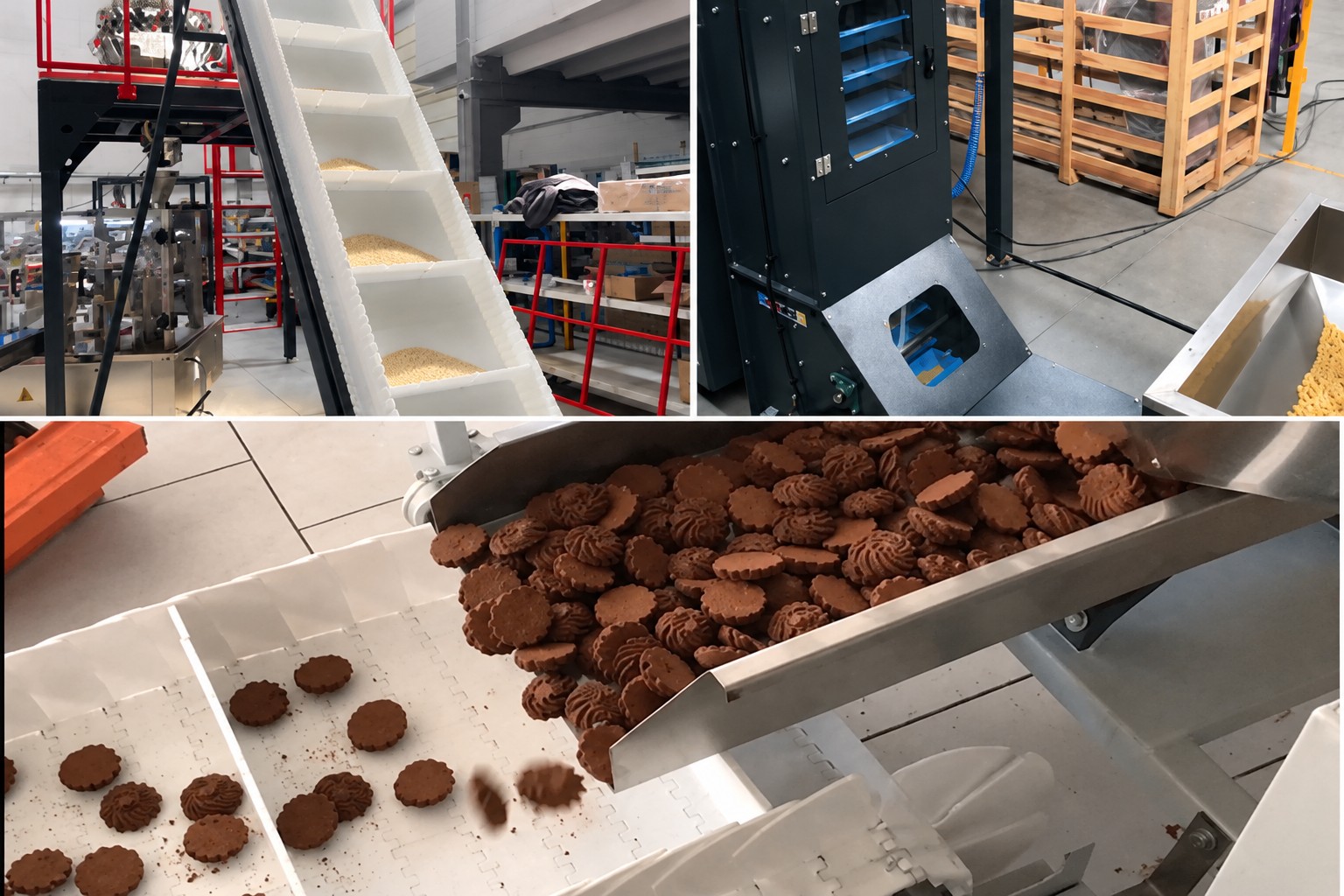
In food and pharmaceutical manufacturing, equipment cleanliness directly impacts consumer safety and regulatory compliance. Sanitary conveyors must be engineered to prevent bacterial harborage points and allow thorough cleaning with minimal water and chemical usage.
Eliminating Hollow Tube Pockets and Sharp Corners
Traditional square tubing frames can develop micro-cracks over time, trapping water and organic matter. Sanitary conveyors utilize open-profile formed stainless steel channels or fully seal-welded round tubular designs.
- Continuous TIG welding ground smooth to a minimum Ra 0.8µm surface finish
- Minimum 45-degree slope on horizontal surfaces to facilitate self-draining washdown
- Standoff brackets separating motor mounts and bearings from the main conveyor frame
Summary & Engineering Outlook
Investing in certified sanitary conveyor construction protects food brands against costly product recalls and slashes daily sanitation washdown labor by over 40%.
More from the Journal
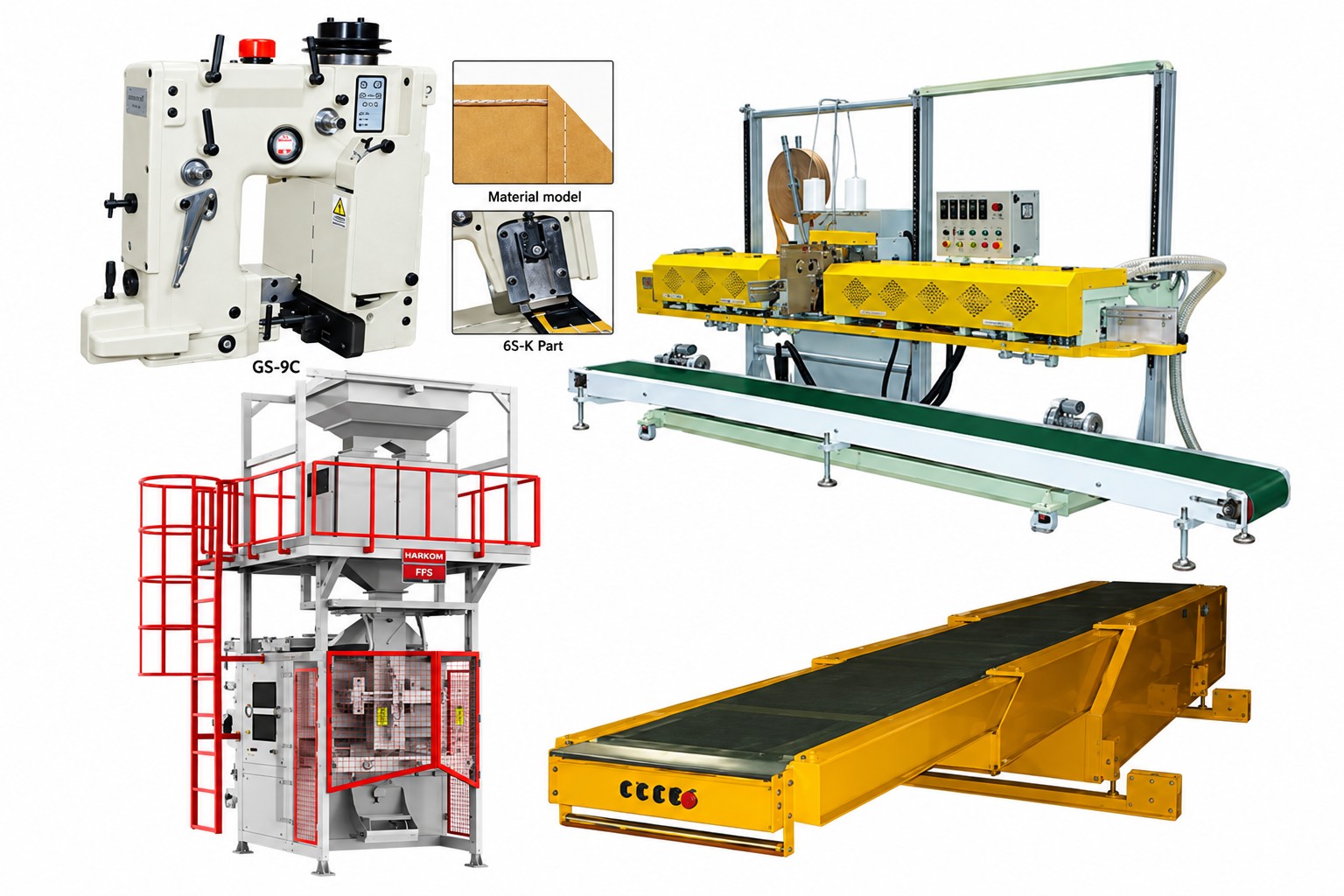
How to Maximize Overall Equipment Effectiveness (OEE) in Automated Packaging Lines
Practical engineering strategies for minimizing minor stoppages, accelerating format changeovers, and balancing conveyor line accumulation buffers.
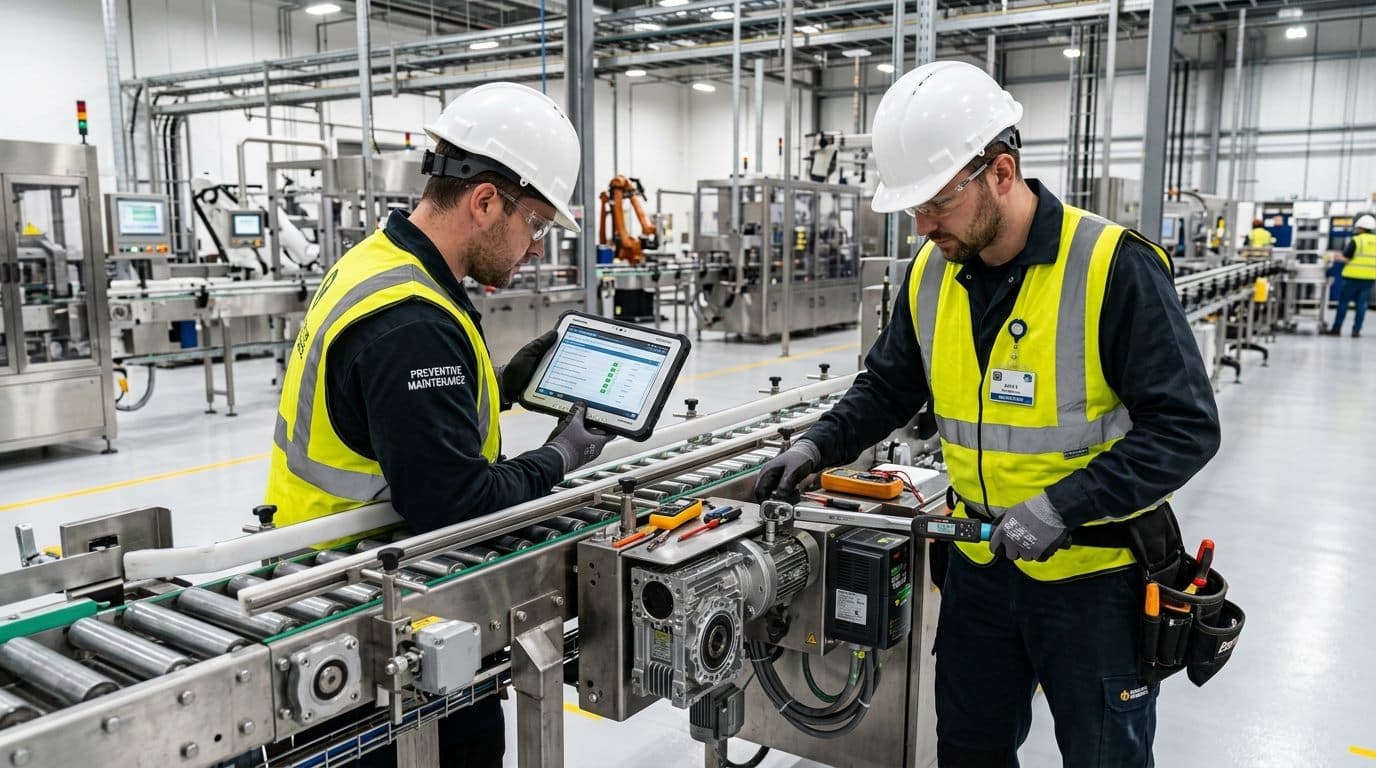
Preventative Maintenance Guide for Industrial Belt Conveyors
Step-by-step maintenance checklist covering laser tracking alignment, motor thermal imaging, and bearing lubrication schedules.